Bibendum releases new Vinonomics graph following Budget
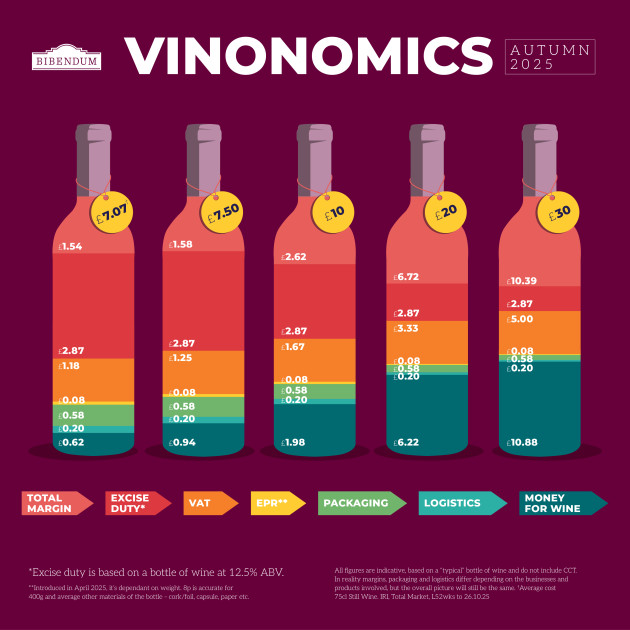
The premium wine distributor Bibendum has released a new ‘Vinonomics’ graph (pictured) which breaks down the different costs that make up the price of a bottle of wine, following the Autumn Budget.
In the Budget, the Chancellor announced that from 1 February 2026, the UK government will be uprating alcohol duty by 3.66%, in line with RPI inflation. The graph shows that this uprated duty will contribute £2.87 to the cost of each bottle of wine with an ABV of 12.5% sold in the UK.
Commenting on these increased rates, Jamie Avenell, group buying director at Bibendum, explained: “Whilst not unexpected, at a time when consumers are already under pressure in their spending, this increase adds further strain on everyone in the supply chain, all the way through to producers – many of whom have nothing left to squeeze. It risks reducing consumer choice and diminishing the experience of the wine category as more wines are pushed out of affordability.”
- Read more: Australian wine supply outstripping demand
The graph also shows how the cost of higher-priced bottles of wine typically contributes more to the cost of making the wine itself – for the average bottle of wine sold in the UK (costing £7.07), only £0.62 goes to the cost of making the wine, as opposed to £10.88 for a bottle costing £30.
Founded in 1982, Bibendum has been supplying premium wine to the UK on-trade for over 40 years. The company was acquired by the C&C group in 2018.
Keywords:
Search




56-58 Church Walk, Burgess Hill, West Sussex, RH15 9AN
Registered in England No. 6646125. VAT No. 938 4452 95